
VideoExpress 3.0 New Update: Everything You Need to Know About This All-In-One AI Video App
What Is VideoExpress 3.0 and Why Does This Update Matter?
VideoExpress 3.0 is the latest major release of Paul Ponna's all-in-one AI video creation platform. This update brings a significant leap in capabilities, introducing new generation modes, smarter editing tools, and a more intuitive interface. Whether you are a content creator, marketer, or business owner, this update positions VideoExpress as one of the most feature-complete AI video tools available on the market today.
What makes this version stand out is how it bundles features that previously required multiple separate tools into a single subscription. From text-to-video to image animation, lip sync, smart editing, and multilingual capabilities, VideoExpress 3.0 addresses the full video production pipeline. The update also introduces performance improvements that make generation faster and more consistent across different content types and use cases.
Image-to-Video with Consistent Characters and Lip Sync
One of the headline features of the VideoExpress 3.0 new update is the ability to animate still images into fully lip-synced videos with consistent character rendering. You can upload a photo of a person or character and have the platform generate realistic mouth movements synced to any audio or script you provide. The result is a natural-looking video that maintains visual coherence throughout the entire clip.
This feature is particularly valuable for creators who want to build branded characters or spokespersons without hiring talent. The consistency engine ensures that the character looks the same across multiple scenes, making it easy to produce series-style content or long-form videos where continuity matters. Lip sync accuracy has also been significantly improved in this version compared to earlier releases.

How to Generate Multiple Characters Talking in the Same Scene
VideoExpress 3.0 introduces the ability to place multiple animated characters in the same video scene, each with independent lip sync. This opens up entirely new possibilities for dialogue-driven content, such as interview formats, educational explainers, or brand storytelling videos with more than one character interacting on screen at the same time.
Setting up a multi-character scene is straightforward within the platform's interface. You assign each character a voice or audio track, and the system handles the animation and synchronization automatically. This dramatically reduces the time and cost of producing dynamic video content that would otherwise require motion graphics software or live actors to execute properly.
Aspect Ratio Flexibility: Vertical vs. Landscape Video Creation
The VideoExpress 3.0 new update makes it simple to switch between vertical and landscape formats, allowing creators to produce content optimized for every platform. Whether you need a 9:16 format for TikTok and Instagram Reels or a traditional 16:9 layout for YouTube and presentations, the platform adjusts your generation settings accordingly without requiring you to redo your work from scratch.
This flexibility is a significant time-saver for marketers and social media managers who need to repurpose the same content across multiple channels. You can generate a landscape version and convert it to vertical within the same project workflow, keeping branding consistent while adapting to each platform's native viewing experience.
Lip Sync HD vs. Standard Prompt Mode — What's the Difference?
VideoExpress 3.0 offers two distinct generation paths for lip-synced content: Lip Sync HD and Standard Prompt Mode. The HD mode delivers higher visual fidelity and more accurate mouth movements, making it ideal for professional-grade output where quality is the top priority. Standard mode, on the other hand, generates content faster and is better suited for drafting or bulk content production.
Understanding when to use each mode is key to maximizing your results. For final deliverables going directly to clients or publishing, Lip Sync HD is the recommended choice. For internal review, A/B testing, or rapid ideation, Standard Mode keeps things moving quickly. The update makes it easy to switch between the two modes within the same project without losing your settings or character configurations.
Working with the Timeline Editor to Build Advanced Video Sequences
The timeline editor in VideoExpress 3.0 is a powerful tool for assembling multiple AI-generated clips into a cohesive, polished video. You can drag and drop individual clips onto the timeline, reorder them, trim awkward pauses, and sequence scenes to create a narrative flow that feels intentional and professional. This level of editing control was previously limited to dedicated video editing software.
The editor also supports layering, allowing you to add music, voiceovers, and sound effects on top of your visual clips. For creators producing mini documentaries, product demos, or tutorial videos, this workflow significantly simplifies the post-production phase. Everything lives within the VideoExpress ecosystem, so you do not need to export and reimport between platforms to complete a finished project.
3D Cartoon Characters, Animals, and Object Animation with Sound Effects
VideoExpress 3.0 expands creative possibilities by supporting animation of 3D cartoon-style characters, animals, and even everyday objects. This feature is ideal for brands targeting younger audiences, educational platforms, or anyone wanting a more playful visual identity. The cartoon rendering engine produces smooth, stylized motion that stands out from generic AI-generated realism.
Sound effects can be layered in during the generation process, adding environmental audio that matches the visual action. For example, animating a dog character can include bark sounds or ambient nature audio in the background. This integrated audio-visual approach saves creators significant time and makes the final output feel polished and production-ready without extensive post-processing.

Creating Cinematic Short Films with Narrative-Style Prompting
One of the most impressive capabilities in this update is the ability to produce cinematic short films using narrative-style text prompts. Rather than describing individual frames, you write a scene as you would in a screenplay, and VideoExpress interprets the narrative to generate a visually cohesive sequence. The result is a short film that has a natural beginning, middle, and end without manual frame-by-frame direction.
This feature is a game-changer for storytellers, filmmakers on a budget, and marketing teams that want high-impact video content without a production crew. The cinematic mode applies appropriate lighting, camera angles, and motion to match the tone of your narrative, whether it is dramatic, lighthearted, suspenseful, or inspirational.
Advanced Timestamp-Based Prompting Explained
VideoExpress 3.0 introduces timestamp-based prompting, which gives creators granular control over what happens at specific moments within a generated video. Instead of describing the entire clip in a single prompt, you can define what the scene should look like at second five, second fifteen, second thirty, and so on. This results in far more precise and intentional visual storytelling.
This feature is particularly useful for promotional content where you need specific product shots or messages to appear at exact moments in the video. For example, you can have an establishing shot at the opening, a product close-up at the midpoint, and a call-to-action graphic at the end, all specified through timestamped prompts entered directly into the generation interface.
Smart Edit — Inpainting, Outpainting, and Object Removal Made Easy
The Smart Edit feature in VideoExpress 3.0 brings professional-level inpainting and outpainting to AI video creation. Inpainting allows you to select a region of a video frame and replace it with AI-generated content that blends seamlessly with the surrounding visuals. This is perfect for fixing unwanted elements, changing backgrounds, or inserting products into existing footage without reshooting.
Outpainting extends the edges of your video frame to fill in additional visual space, which is useful when repurposing content for different aspect ratios. Object removal lets you erase elements from a scene entirely, such as logos, people in the background, or distracting objects, and the AI fills in the space naturally. These tools work directly within the VideoExpress interface, eliminating the need for external editing software.
Multilingual Lip Sync: Reaching a Global Audience in Any Language
VideoExpress 3.0 supports multilingual lip sync, allowing you to take an existing video and re-dub it in a different language while keeping the character's mouth movements synchronized to the new audio. The platform demonstrated this feature live with a Spanish example during the update tutorial, producing convincing results that closely matched natural speech patterns in the target language.
This capability is a significant advantage for global brands, online educators, and YouTube creators who want to expand their reach without re-recording content from scratch. Instead of producing separate videos for each market, you can generate language-specific versions from a single master clip. The quality of the multilingual output continues to improve with each platform update.
Simple Mode vs. Advanced Mode — Which One Should You Use?
VideoExpress 3.0 gives users the choice between Simple Mode and Advanced Mode for video generation. Simple Mode is designed for creators who want fast results with minimal configuration. You enter a basic prompt, choose your settings, and the platform handles the rest. It is the best starting point for new users or for quick content ideas that do not require fine-tuned control.
Advanced Mode unlocks deeper customization, including control over generation length, prompt weighting, motion intensity, and character consistency settings. Experienced users who want to push the platform to its limits will find Advanced Mode essential for producing highly specific or complex video sequences. Most creators will find themselves using Simple Mode for ideation and Advanced Mode for final production runs.
VideoExpress 3.0 vs. Competitors: AI Cost Comparison Breakdown
One of the most transparent moments in the VideoExpress 3.0 update presentation was the detailed cost comparison between VideoExpress and competing AI video platforms. The breakdown showed that many competitor tools charge significantly more per video generation, especially when using premium or priority queue features. VideoExpress positions itself as a high-value alternative that delivers comparable or superior output at a lower cost per clip.
The update also addressed the reality of priority queuing costs across the industry, noting that AI rendering is an inherently resource-intensive process. Rather than hiding these costs in vague subscription tiers, VideoExpress provides a transparent credit system that gives users a clearer understanding of what they are paying for with each generation. This level of pricing transparency is relatively rare in the AI video market.
New Features in the Update: Fix Videos, In-App Tutorials, and More
The VideoExpress 3.0 new update ships with several quality-of-life improvements that make the platform easier to use and more forgiving of imperfect outputs. The Fix Videos feature allows you to correct quality issues or physics errors in generated clips without regenerating the entire video from scratch. This saves credits and time when a clip is mostly good but has a small visual glitch or inconsistency.
A new in-app Tutorials tab has been added to the platform, giving users instant access to guided walkthroughs directly inside the interface. This reduces the learning curve for new subscribers and provides a quick reference for existing users exploring features they have not yet tried. The update also introduces a Project ID system that makes it easier to contact customer support with specific issues tied to a particular generation.
How to Export Your Videos — Resolutions, Formats, and Final Settings
Exporting finished videos in VideoExpress 3.0 is a straightforward process, but the platform offers several options worth understanding before you finalize your project. You can choose from multiple resolution outputs, with higher resolutions available for premium subscribers. The platform supports standard video formats compatible with major publishing platforms, including social media, streaming services, and web embedding.
Before exporting, it is recommended to review your timeline for any awkward pauses or transitions that could affect viewer retention. The built-in cropping and trimming tools within the editor allow you to clean up these issues without leaving the platform. Once your video is polished, the export process is fast and the resulting file is ready to upload directly to YouTube, TikTok, or any other distribution channel.
Public Gallery, Clone Voice API, and Tool Integrations
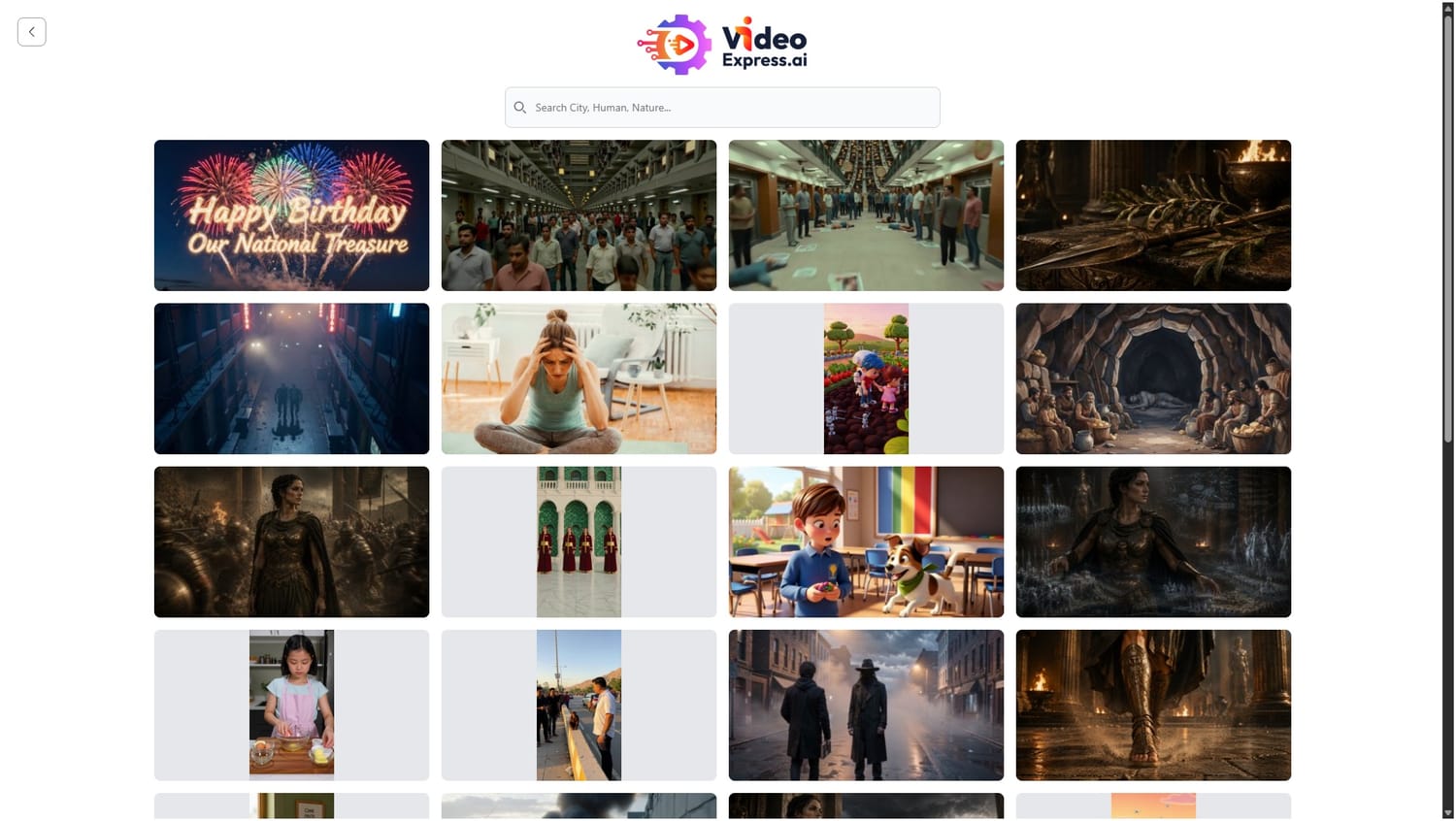
VideoExpress 3.0 includes a Public Gallery feature that allows users to showcase their AI-generated videos within the platform's community space. This serves as both a source of inspiration and a way to see how other creators are using the tool. You have control over what you choose to share publicly, and the gallery is a useful resource for discovering new prompting techniques and creative approaches.
The platform also integrates with the Clone Voice API, enabling creators to use custom voice clones in their video narrations and lip-synced content. This integration bridges VideoExpress with the broader suite of AI tools from the same developer, including HumanTalk and CloneVoice. Together, these integrations allow for a highly personalized and automated video production workflow that can scale with your content needs.
Final Verdict — Is the VideoExpress 3.0 New Update Worth It?
The VideoExpress 3.0 new update is a substantial step forward for the platform and for AI video creation in general. The combination of consistent character generation, multilingual lip sync, Smart Edit tools, cinematic prompting, and the timeline editor creates a genuinely capable production environment that was not previously available in a single subscription. For creators who regularly produce video content at scale, the value proposition is strong.
Whether you are a solo creator, a digital marketing agency, or a business owner looking to produce professional video content without a large budget, VideoExpress 3.0 delivers the tools to make it possible. The transparent pricing model, in-app tutorials, and ongoing updates from the development team signal a product that is actively invested in its users. If you have been on the fence about trying the platform, this update is the best reason yet to get started.
SHARE


Created with ©systeme.io• Privacy policy • Terms of service